
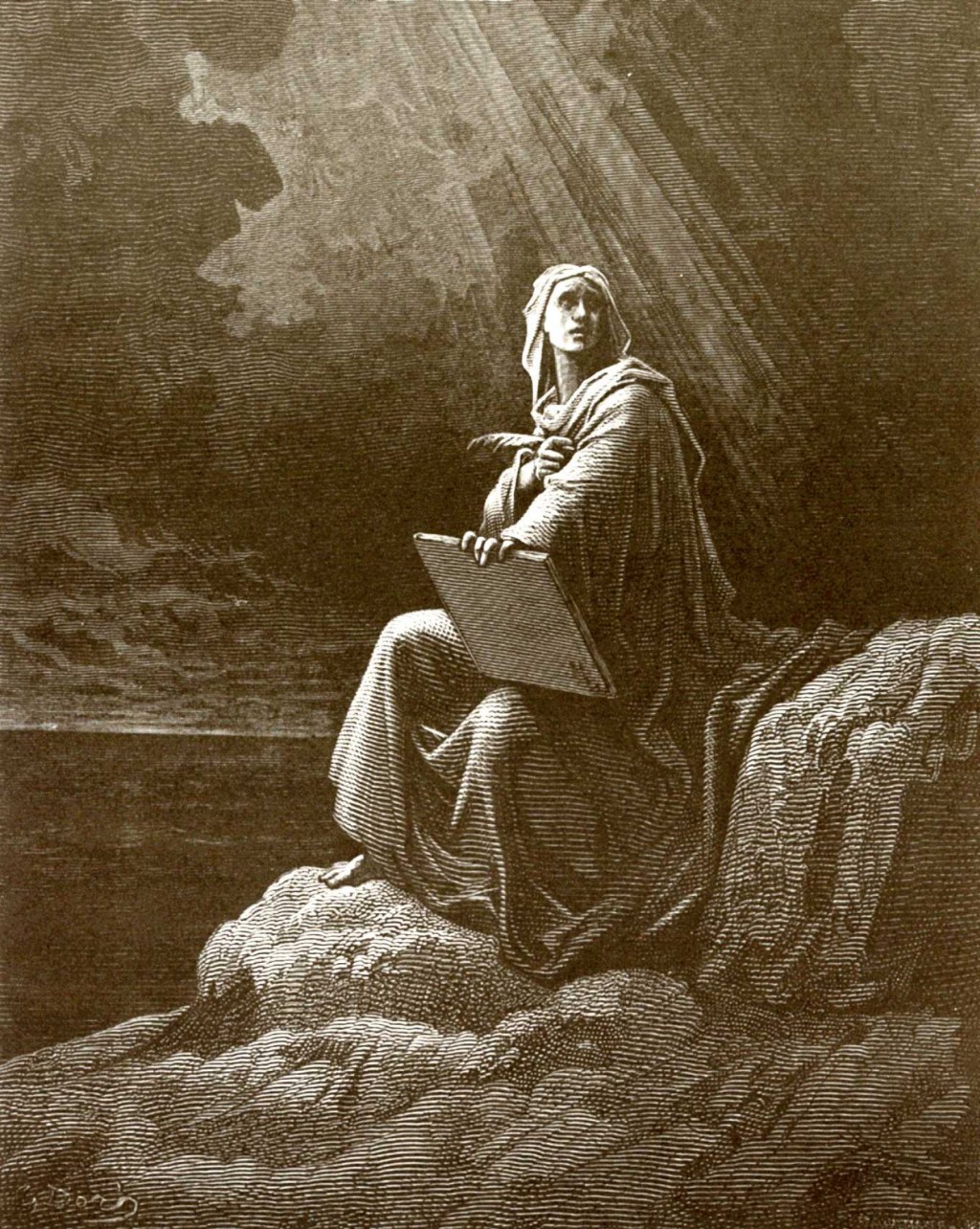
Revelation is one of the most well-known yet unknown books in the entire Bible. Everyone seems to know something about it, yet many people also seem to struggle to know what it’s really about. What is most worrying is that this book is rarely taught in churches, so the only people who seem to speak about it are conspiracy theorists or people with a particular interest in end time events.
But I want to say today that Revelation can be a book of immense blessing to you. It all depends how we go about teaching it and interpreting it.
THE MISUSE OF REVELATION
In the early 1990s, there was a man named David Koresh who lived in Waco, TX. And he claimed that he was the only one on earth who could properly interpret the book of Revelation. It all started with him teaching that he could determine the day the world would end. Particularly, he believed the seven seals (Rev. 6) were the key to knowing the end of the world.
But as time went on, he began to insert himself into these prophecies. He saw himself as the Lamb with authority to open the seals, and thus, he built a community around him called the Branch Davidians. He stockpiled weapons to defend himself from “Babylon” which was the U.S government, and he also proclaimed that all women in his following belonged to him, so that he could establish a new humanity.
But after a dispute with the ATF, a 51-day standoff ensued. The siege ended when the compound caught fire, and over 70 men, women, and children died, including Koresh.
April 19th, 2026 will be the 33rd anniversary of the Waco Siege and the end of the Branch Davidians, and with it comes the sober reminder that as Christians, we must be diligent to understand and teach the Bible faithfully, not just the parts we like or are familiar with, but every single page of the Scriptures.
One of the first things we can do to take a step in the right direction is to understand the Genre of Revelation.
THE GENRE OF REVELATION:
The great thing is the book tells us exactly what the genre is, and Revelation is a mixture of 3 genres. Let’s read verses 1–4:
The revelation of Jesus Christ, which God gave him to show to his servants the things that must soon take place. He made it known by sending his angel to his servant John, 2 who bore witness to the word of God and to the testimony of Jesus Christ, even to all that he saw. 3 Blessed is the one who reads aloud the words of this prophecy, and blessed are those who hear, and who keep what is written in it, for the time is near.
4 John to the seven churches that are in Asia:
Grace to you and peace from him who is and who was and who is to come, and from the seven spirits who are before his throne,
APOCALYPSE:
“The revelation of Jesus Christ.” When we hear the word “apocalypse” we usually think of the end of the world. But the Greek word for “revelation,” which means “to reveal or to uncover”, anglicized becomes apocalypse.
This is a very popular writing style in the days of John, (About 90 A.D), and it mainly is a pulling back of the curtain to reveal heavenly and spiritual realities. John and the churches he writes to are going through intense persecution, and it seems like the church is going to lose. Yet, God pulls back the curtain and shows him what’s going on behind the scenes, ultimately ending with God himself intervening a winning the final battle. Apocalypse utilizes symbols to communicate big truths about God and his work.
PROPHECY:
“Blessed is the one who reads aloud the words of this prophecy…” When we think of prophecy, we typically think of foreseeing the future. But prophecy literally means to proclaim God’s message. There’s an old book in my office I love called “The Art of Prophesying” by William Perkins, and it’s a book about preaching. In many ways, prophecy is like preaching.
The vast majority of prophecy in the Bible is focused on calling people to repent and change their ways. God speaks into their situation, speaks judgement against the wicked and encourages the righteous. In many ways, prophecy is something to be obeyed rather than a glimpse into the future. Some sections of prophecy do contain aspects of foreseeing, but that is just the nature of God’s word. He declares the end from the beginning.
EPISTLE:
“John to the seven churches that are in Asia:…” This is the most overlooked aspect of Revelation. In fact, we kind of just relegate the first couple chapters to being a letter, but the truth is the whole book is a letter written to the churches. It begins this way, it ends that way, and thus, everything in Revelation has to have some sort of relevance to the churches. It’s addressed to them.
Their situation is hard. Under Emperor Domitian in the 90’s A.D, there is mandated worship of the emperor. If you fail to worship him, you could be persecuted and even killed. John is writing from Patmos, why is he there? He was exiled. Cut off from society because of the gospel he preached. And this would only get worse in the following century.
The genre of Revelation will clue us in on how to properly approach it, it is a book that pulls back the curtain on our world and shows us the unseen spiritual reality of everything around us, it is a book that calls us out of sin and to a life of faithfulness, and it is a book that was written to churches, both in the past, and the present, thus, it is relevant for every single one of us.
APPROACHES TO REVELATION:
Over the last 2,000 years, Christians have approached this book in many different ways, and I don’t want us to get too bogged down in various interpretations, but in order to properly understand how we’re going to approach it, then it’ll be good to just mention a few.
PRETERIST/HISTORICIST:
These are really two different approaches, but they are similar in a lot of ways. Both of these groups believe that much of Revelation has already been fulfilled in the past. The Preterist would say most of it happened in the first century, the historicist would say most of Revelation happened and is happening throughout the whole history of the church. The preterist view is not very popular, but the historicist view was extremely popular in the Middle Ages.
FUTURIST:
This is the most popular modern approach and is probably the one you are familiar with in some way. The futurist would say that the vast majority of the book is in the future, and has yet to happen. Essentially, everything from chapter 4 and beyond is in the future. If you’ve ever seen movies like Left Behind, those have been inspired by a futurist approach. This view has always existed in some form.
IDEALIST:
This view has always been around in some way, but has grown in popularity in response to the huge number of futurist interpretations out there. The idealist would say that the visions and symbols of Revelation are not specific future events, but rather patterns and trends in history and in the spiritual warfare going on behind the scenes. The idealist then emphasizes how Revelation is relevant to every generation.
But which is correct?
I will walk us through the book using a mixed approach, combining the strengths of all the views, but mainly approaching it as an idealist. The vast majority of solid, trusted scholars point out that Revelation is multi-faceted and is capable of multiple dimensions. Thus, it’s probably best to approach the book taking the strengths from the various views. Revelation was written firstly, to first century Christians going through real persecution, as the preterists point out. Yet, certainly aspects of Revelation, especially the ending when Christ returns are still in the future, as the futurists rightly point out. But Christians throughout all history have been involved in this spiritual warfare, as the historicists show us. And Revelation ultimately gives us timeless truths and general encouragements, which the idealists rightly show us. So, it’s best for us to approach this book in a mixed way.
WHY YOU SHOULD READ REVELATION:
Here in the last few moments, I want to encourage you as we begin a challenging book by pointing out a couple reasons within the opening verses as to why you should read revelation, that may get overlooked if we were to approach it wrongly.
The revelation of Jesus Christ, which God gave him to show to his servants the things that must soon take place. He made it known by sending his angel to his servant John, 2 who bore witness to the word of God and to the testimony of Jesus Christ, even to all that he saw.
I. BECAUSE IT’S GOD’S WORD.
Something that John makes very clear immediately to us, is that this letter is God’s word. And there’s this unbroken chain that begins with God, who gives this revelation of Jesus, not just meaning that the revelation is from Jesus, but it’s also about him, about his reign over the whole earth, and about his return to make all things new.
When we avoid Revelation or say that it’s too hard to understand, we almost diminish its quality of being God’s word. It’s not a puzzle to be solved; it’s God’s word revealed to us. And we should treat it that way.
II. BECAUSE IT’S WRITTEN FOR US.
God gave Jesus this revelation “to show to his servants the things that must soon take place.” God gave this to John so that we might have it. Revelation is not an obscure riddle; it’s a revealed message, and it was meant to be heard and read. And it was meant for us. It’s almost like God has told us, I have an important message for you all that will bless you, and we’ve responded by saying “sorry God, that’s too scary or hard to understand.” We should read Revelation because its message of endurance, perseverance, and the absolute kingship of Christ over all things is maybe one of the most relevant messages in the Bible for Christians living in the 21st century.
The world you live in asks you as a Christian to compromise in so many areas. Immorality is the norm. And it can be daunting as a Christian to navigate life without falling into those traps. But Revelation is written just for you.
III. BECAUSE IT’S MEANT TO BE A BLESSING.
“Blessed is the one who reads aloud the words of this prophecy, and blessed are those who hear…” The book ends with a similar statement and throughout are some similar blessings. This is the only book in the Bible that says you will be blessed, simply by reading it. Revelation shows us the blessings of faithfulness to Christ through every circumstance. And honestly, I want to be blessed by reading this book, and you should too. It was never meant to be something scary or unapproachable, but it was meant to be something that blesses us and shows us the glory of God in our lives today. Revelation is God’s gift to us.
IV. BECAUSE IT’S MEANT TO BE OBEYED.
“And blessed are those who hear, and who keep what is written in it, for the time is near.” Some people might ask, “what’s the point of Revelation?” and the broad answer is: to bless God’s people and call them to obedience. Nowhere in the Bible will you find stronger calls to remain faithful and to not compromise with the world than here in Revelation.
I pray that our time in Revelation will be both a blessing to you, and a calling out of our sin, and into faithfulness to Jesus, the King and Redeemer of the whole world. This book wasn’t given to us for people to argue over or to decipher, this book was given to bless, to encourage, and to display the absolute glory and supremacy of Jesus Christ in every circumstance.
*This article comes from a sermon preached on Wednesday, April 15th, 2026.


Leave a comment