
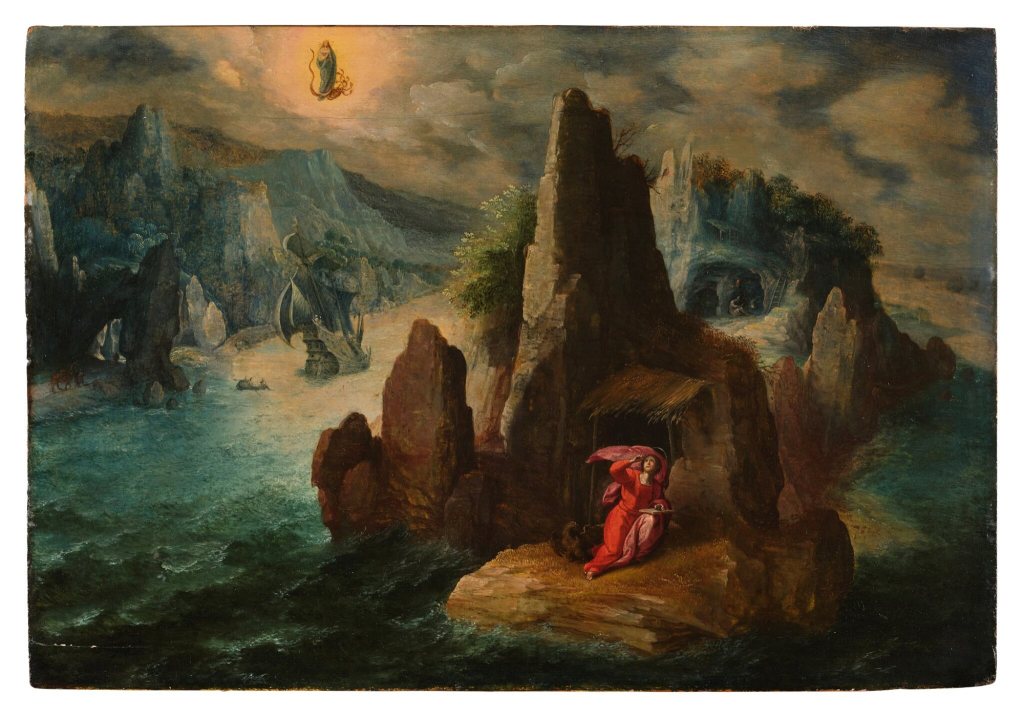
If our last study was understanding Revelation in its style and interpretation, this week I want to show you the center of the book of Revelation, what it revolves around, and what makes Revelation the book we see today.
4 John to the seven churches that are in Asia:
Grace to you and peace from him who is and who was and who is to come, and from the seven spirits who are before his throne, 5 and from Jesus Christ the faithful witness, the firstborn of the dead, and the ruler of kings on earth.
There’s a lot here, so let me introduce you to another distinct feature of Revelation that you may not be used to.
THE SIGNIFICANCE OF SEVEN:
Revelation, like other biblical prophecy, uses numbers to emphasize certain themes or communicate deeper truths than what is often immediately certain to us.
The most common number you are going to encounter in Revelation is the number seven. John writes to seven churches, there are seven spirits, there are seven golden lampstands, there seven stars in the hand of Jesus, there are seven seals, there are seven trumpets, there are seven bowls; this has to be the craziest coincidence of all time, right?
Seven is a significant number not just in Revelation but throughout the whole Bible. In Genesis, the world is created and completed in seven days. In Leviticus, the land is supposed to rest every seventh year. Joshua marches around Jericho for seven days. Noah was told to bring seven pairs of clean animals onto the ark. Peter asks Jesus, “Should I forgive my brother seven times?” and Jesus tells him, “Not just seven, but seventy times seven” (Matt. 18:21–22).
Seven is a number of completeness. It calls our mind back to creation. So, John really is writing to seven churches, but the implication here is that this information is meant for the full number of God’s people as well.
John mentions here the seven spirits that are before the throne, what does this mean? It’s a reference to the Holy Spirit and the fullness of his work and power. The implication for the entire book which revolves around the number 7 is that God is completing and bringing into fullness his plans for history and his glory and power displayed to the world. This is a major key to understanding the message of the book.
Yet, the book doesn’t revolve around the number seven, it’s merely a supporting tool that helps us see the glory of the center of the book.
The center of the book is here in verses 4-5: “him who was and who is and who is to come, and from the seven spirits who are before his throne, and from Jesus Christ.”
The center of Revelation is the Triune God, Father, Son, and Spirit. More specifically, from v. 1, the focus is on Jesus Christ.
THE CENTER OF REVELATION:
Jesus Christ is the Center here in Revelation, more than any book in the Bible. Even the gospels which show Christ in action in his life, do not even compare to the picture of Jesus we get here. Revelation shows Christ in his glory to us. What Peter saw at the Transfiguration in Matthew is what we see throughout all the pages of Revelation. That’s why it’s such a shame that we neglect a book like this: we get to see Christ in his glory here.
We’re going to look at a few key aspects of Jesus Christ as the center of Revelation, and the first thing we are going to turn our attention to is:
HIS IDENTITY:
John describes Jesus, the center of Revelation by three titles.
1. The Faithful Witness.
This means a couple things and reflects a key idea of the book. Firstly, Jesus faithfully testifies to who God is. The writer of Hebrews talks about this idea in Hebrews 1:3:
“He is the radiance of the glory of God and the exact imprint of his nature.”
Jesus faithfully shows us in the flesh who God is.
Secondly, Jesus is a faithful witness in the sense that he embodies what it means for us to witness. Have you ever heard of a martyr? The Greek word for witness, martyria, is where we get this word we use for those who are willing to die for their faith. One of the major calls of Revelation is to be a faithful witness, even to death. Jesus is the first example of this.
One of the toughest challenges we have to wrestle with in this book is the fact that Revelation is calling us to die for the gospel, and we won’t even risk social awkwardness for the gospel, myself included. We just have no comparable concept for this. This is why we have to know Jesus as the Faithful Witness, because it puts the little things we cherish so much in perspective.
2. The Firstborn of the Dead.
In the Bible, the firstborn is the person who receives the inheritance, who holds the highest place of honor in the family. The OT is full of stories about firstborns, and the strife within family. Jesus is the firstborn of the dead. He holds the highest honor.
But the main idea behind this is the final part of the title: “of the dead.” This is a reference to his resurrection from the dead, but what is so special about the resurrection? Haven’t other people in the Bible been raised from the dead? Yes, but Christ was the first to be raised to an imperishable, glorified body that lives forever. This is the glory that is promised to us, and Christ is the first to enter into it. In a sense, his resurrection from the dead is like the first evidence to us, that God is making all things new. That one day, we will be raised like Christ was.
How do you encourage a struggling people to be a witness for the gospel, even to death? You remind them that death is not the end, and that no matter what happens to us, the one who’s coming soon is going to raise us to an imperishable life. This is why millions of Christians throughout history were faithful unto death; they knew that this imperfect, hard life was just a temporary stopping place on the way to the perfect, eternal life awaiting them.
3. The Ruler of the Kings of the Earth.
One of the most significant themes in Revelation is the idea that Jesus is the sovereign king over this world. Domitian may be the Emperor, and he may be exercising his power in cruel ways against us, but Christ is above it all. There have been many religious movements in history that were snuffed out and exterminated, and for Christians there was a very real fear that if the emperor decided he wanted them all gone, then they would be hunted down and killed.
One of the earliest few documents that we have that reference Christians is a letter from a Roman magistrate named Pliny the Younger. And in it, he writes to the Emperor named Trajan (this is about 20 years after Revelation is written), and he asks for advice on how to deal with the Christians.
He explains his standard procedure, he would capture suspected Christians, and then he tells them to invoke the Roman gods, offer prayer with incense to an image of the emperor, as well as other statues of gods, and to curse Christ. If they did that, he would let them go, which many did.
He then says,
“Meanwhile, in the case of those who were denounced to me as Christians, I have observed the following procedure: I interrogated these as to whether they were Christians; those who confessed I interrogated a second and a third time, threatening them with punishment; those who persisted I ordered executed. For I had no doubt that, whatever the nature of their creed, stubbornness and inflexible obstinacy surely deserve to be punished. There were others possessed of the same folly; but because they were Roman citizens, I signed an order for them to be transferred to Rome.”
Pliny the Younger, Letters (10.96)
How can someone be willing to take their testimony of Jesus to the death, even when they’re offered three opportunities to deny? Because they know that Trajan is a king, but there is a king above even him, that our loyalty must go to over everything else. He is the Faithful Witness, the Firstborn of the Dead, and the Ruler of the Kings of the Earth; he is the center of this letter, and the center of all history. That is the central message of Revelation.
But if that were not enough, John also shows us the Work of Christ who is King over us in these next few verses.
HIS WORK:
Revelation 1:5a–7:
5To him who loves us and has freed us from our sins by his blood 6 and made us a kingdom, priests to his God and Father, to him be glory and dominion forever and ever. Amen. 7 Behold, he is coming with the clouds, and every eye will see him, even those who pierced him, and all tribes of the earth will wail on account of him. Even so. Amen.
Here, John shows us three major works of Christ in our lives.
1. He loves us.
This phrase has become almost not worth repeating because we use it so often, and maybe in contexts that aren’t always fully true. God loves everyone in a general sense, where he sends rain and good things to all people everywhere. But there is a special love that Christ has for his people.
38 For I am sure that neither death nor life, nor angels nor rulers, nor things present nor things to come, nor powers, 39 nor height nor depth, nor anything else in all creation, will be able to separate us from the love of God in Christ Jesus our Lord.
Romans 8:38–39
I want you to see the assurance there is in knowing that this glorious Christ we just spoke of loves us like no one else.
The qualities of his love are shown mainly in these next two works, but the work that underlies everything that Jesus does is this love that we can never be separated from. When I go through challenging times in my life, Christ hasn’t stopped loving me. That is the assurance of this point.
2. He has freed us from our sins.
Christ’s work of love is primarily seen in this act, and this is the special love I was talking about. He loved us even to death. That’s what’s hard to wrap our minds around, that this Ruler of the Kings of the Earth was willing to endure the death penalty that every one of us deserves for sin.
Remember back to 1 John 4:10:
10 In this is love, not that we have loved God but that he loved us and sent his Son to be the propitiation for our sins.
That’s the craziest thing about this love, we didn’t love first so God decided to love us back; he loved us and died for us while we were sinners.
Some of you may be feeling the weight of your sin, and I hope that we all understand the gravity of sin. I want you to know that Christ can free you. You don’t have to be enslaved forever. He can set you free. Whether you’ve never come to him at all, or you know Christ and still struggle. He can set you free, because he’s been doing it all throughout history. Believe in him, trust in his work, and hand it all to him. Let him make you new.
3. He’s made us a kingdom of priests.
Remember back to Exodus 19:5-6, where God tells Moses:
5 Now therefore, if you will indeed obey my voice and keep my covenant, you shall be my treasured possession among all peoples, for all the earth is mine; 6 and you shall be to me a kingdom of priests and a holy nation.’
God had promised to make his people a kingdom of priests. Remember the role of a priest, they were the ones who entered into God’s presence and made offerings to him. In Jesus Christ, everyone becomes a priest to God, able to experience his presence through the Spirit that lives in each of us.
But we’re also a kingdom. Which would have been hard to believe if you’re one of John’s churches he’s writing to, but consider the significance here. Throughout the entire book, John is going to talk about us conquering evil in the world through our faithfulness, this kingdom is unseen. It doesn’t have walls or horses, but it does have a King. And its members extend over all the earth. And when we remain faithful to Christ, it’s an act of conquering the opposition around us. There’s a triumphant note in this.
Remember, Revelation means to pull back the curtain on reality. The churches of Asia could look around and see the persecution and hardships, and say that we’re losing the battle. But Jesus pulls back the curtain and shows the kingdom of Christ is all around us. And is winning victories, especially when believers are enduring hardship and death for Christ. The blood of martyrs is like the mortar that holds the walls of the kingdom together.
The powers and problems in this world are daunting, but behind it all we have to understand that Christ is king, and he’s building his kingdom in every nation, and they are winning unseen victories every day. And through every single moment, we’re not doing it on our own, Christ is there with us through the Spirit. He’s never going to leave us. That is the blessing of knowing we are a kingdom of priests. That’s why John is able to say to him be glory and dominion forever and ever, Amen! In other words, let’s worship him and see his rule every single day!
He’s done all these works, and the beauty here is that the work is not fully complete. Look what he says,
Behold, he is coming on the clouds, and every eye will see him, even those who pierced him, and all the tribes of the earth will wail on account of him. Even so, Amen.
Revelation 1:7
This is a combination of two OT passages: Zechariah 12:10 and Daniel 7:13-14. This is mainly a Zechariah quote, but look at the full Daniel quote:
“13 I saw in the night visions, and behold, with the clouds of heaven there came one like a son of man, and he came to the Ancient of Days and was presented before him. 14 And to him was given dominion and glory and a kingdom, that all peoples, nations, and languages should serve him; his dominion is an everlasting dominion, which shall not pass away, and his kingdom one that shall not be destroyed.
The intended purpose of this double quote is this: one day, Jesus is going to return, and return not as a lowly carpenter, but as a king on the clouds. And when the world sees him, they will weep. Either with joy that he’s come to save them, or fear that they are going to be destroyed. John is saying, endure the hardships of today, because tomorrow Jesus is coming to set things right and make things new.
When Christ returns, will you cry tears of joy or tears of fear? I think in many ways that reveals our relationship with him.
It all ends with this:
8 “I am the Alpha and the Omega,” says the Lord God, “who is and who was and who is to come, the Almighty.”
Revelation 1:8
The first and last letter of the Greek alphabet is Alpha (A, α) and Omega (Ω, ω). In other words, he’s A to Z. He is the eternal God. He’s always been, he always is, and he is coming back. He is the almighty, and above every wicked ruler and power on this earth. That is the encouragement for us today. No matter what is happening in the world, God is still God, and we are still his people.
I want to end by reading an excerpt from John Calvin’s preface to the 1535 French Bible. In his day, it was illegal for the Bible to be translated into other languages and many of his colleagues and friends had faced death and persecution for their work in bringing the words of Scripture to the people. But despite the danger, Calvin considered that the gospel and its spread was far more valuable than his comfort, and the Christ’s love for him overcame every evil in this world.
“What then shall estrange and alienate us from this holy gospel? Shall injuries, curses, disgrace, and want of worldly honour?… Will there be afflictions, prisons, tortures, torments? But we know by the example of Jesus Christ that this is the way to arrive at glory. Finally, will there be death? But death does not do away with a life that is worth having.
John Calvin, Preface to the 1535 French Bible
In short, if we have Jesus Christ with us, we shall come upon nothing so accursed that he will not turn it into a blessing; nothing so desecrated that it shall not be made holy; nothing so evil that it shall not turn into our good. For, this is eternal life; to know one, only true God, and Jesus Christ whom he has sent, whom he has established as the beginning, the middle, and the end of our salvation.”
*This article comes from a sermon preached on Wednesday, April 22nd, 2026.


Leave a comment